Wild Raspberry
☠ Poisonous lookalikes — know these first
Before any of the good news: these are the plants this species gets confused with, and the exact marks that separate them. Learn these first.
Blackberry (Rubus fruticosus aggregate)
Pick one and look at the core. A blackberry comes away from the plant with its soft, solid core inside the fruit — the berry is filled. A raspberry leaves its core behind on the plant and comes away hollow, like a tiny cup or thimble. Blackberry canes are also stouter, with heavier, hooked thorns.
Risk: A friendly confusion — blackberry is also edible when its own identity is certain. The core test separates the two cleanly, and it is worth doing every time until it becomes reflex.
Thimbleberry (Rubus parviflorus)
Thimbleberry has no prickles at all, very large soft maple-shaped leaves, and a shallow, domed red fruit that looks like a small raspberry pressed flatter. It grows as a smooth-stemmed shrub, mostly in the west and around the Great Lakes.
Risk: Low — thimbleberry is edible and pleasant. The smooth stems and big maple leaves give it away at a glance.
Salmonberry (Rubus spectabilis)
A coastal British Columbia shrub with golden-brown, shredding bark and fruit that ripens yellow to orange to red. The berry is raspberry-shaped and hollow-cored like its cousin, but the bark and the coastal setting tell you which one you have.
Risk: Low — salmonberry is a traditional coastal food. The shredding golden bark separates it from raspberry canes anywhere the two might meet.
Some summer evening in July, on the edge of almost any Canadian clearing, a cane of wild raspberries will be warm from the sun and better than anything in a plastic clamshell. Wild raspberry is also one of the most forgiving berries a beginner can learn — because it carries its own built-in identity test, right in the fruit.
Identification
Start with the test, then confirm it with the plant.
The hollow thimble. Pick a ripe berry gently and look at where it detached. A raspberry slips off its central white core and comes away hollow — a little open cup, shaped like a thimble. That hollow is the signature of the raspberry family. No hollow, no raspberry, whatever the colour of the fruit. Practise the test until your hands do it automatically.
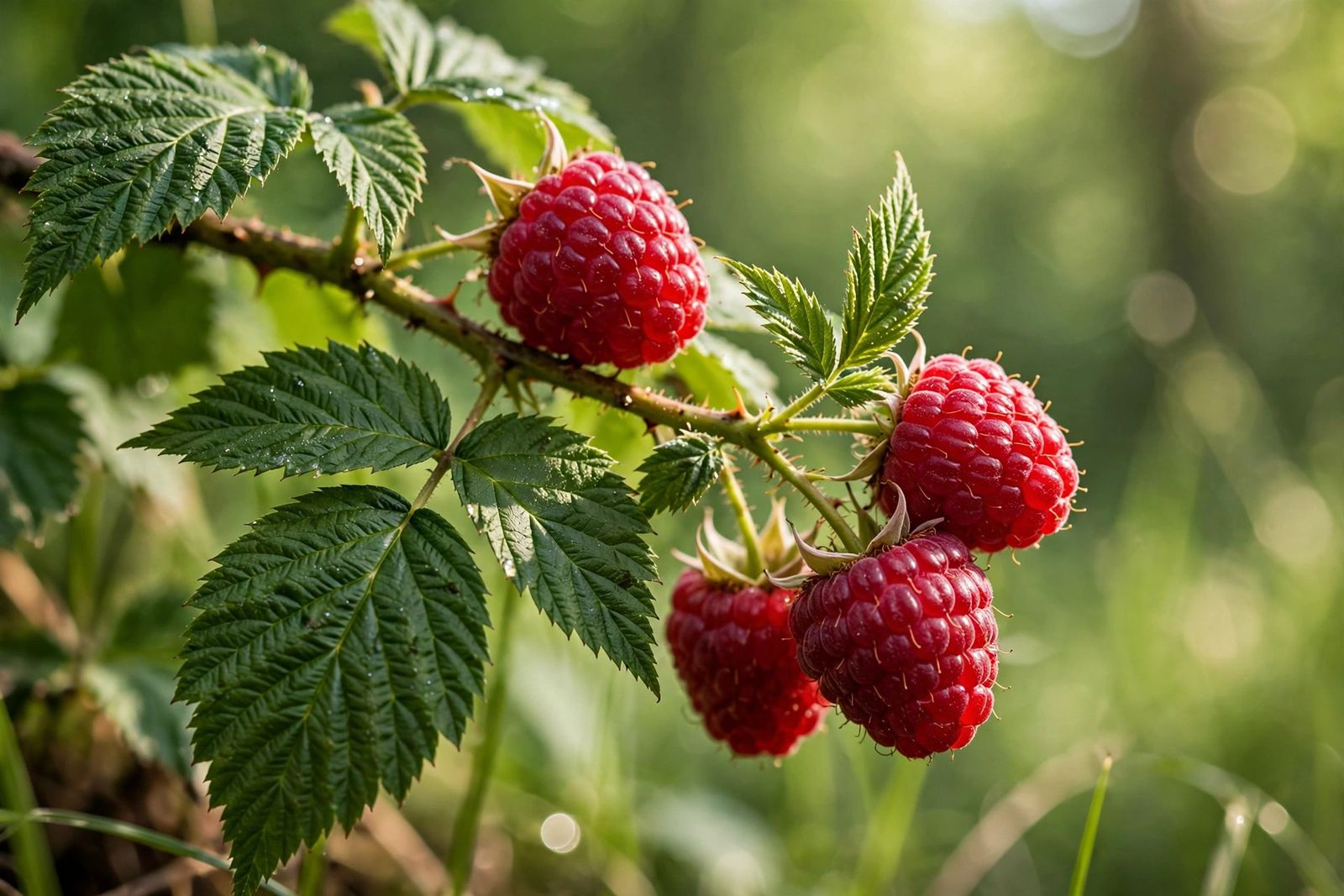
The canes. Raspberry grows as arching canes, usually one to two metres tall, armed with fine, straight, bristly prickles — annoying rather than dangerous. Young canes are often distinctly paler, carrying a whitish or bluish bloom over green or reddish skin. Older canes turn brown and peel slightly. Canes fruit in their second year, so a patch holds a mix of leafy young canes and fruiting older ones.
The leaves. Compound leaves of three to five oval, toothed leaflets, green above and unmistakably pale — almost white and softly woolly — underneath. Flip a leaf over on a breezy day and the whole patch flashes silver-green. That pale underside is one of the fastest ways to spot raspberry at a distance.
The fruit. An aggregate of tiny juicy drupelets clustered around the hollow, ripening from green through pink to full red — rarely amber in some plants. Ripe means it releases from the core with the gentlest pull. If you have to tug, it’s not ready, and it won’t sweeten afterwards.
Season and habitat
Wild raspberry fruits from July into August across most of Canada, stretching into September at elevation, near cold water, or in the north. A good patch ripens in waves, so the same canes reward two or three visits a week apart.
Look where light meets disturbance: forest edges, clearings, old logging roads, burn sites a few years on, power line cuts, fence lines and the sunny rim of trails. Raspberry is a pioneer — it moves into opened ground fast, fruits hard for some years, then fades as the forest closes back over it. Last decade’s clearing is this summer’s berry patch.
Harvest and preparation
The honest risks here are practical, not botanical. Done properly, the hollow-core test has no deadly lookalike standing behind it. What actually spoils a raspberry day is unripe fruit — hard, sour, and not worth picking — and picking from sprayed or dusty places: roadside canes collect traffic grime, and trail edges may be treated. Choose patches set back from roads and wash the berries at home.
Pick into a shallow, rigid container; raspberries crush under their own weight in a deep bucket, and the bottom layer turns to jam before you reach the car. Leave the pale and hard berries for the next visit and for the birds. Take from many canes rather than stripping one, and leave some patches entirely alone each year.
Eat them as they are, fold them through cream, or cook them down — heat makes the flavour deeper and darker. And as with every wild food, follow the first-taste rule the first time: a small portion, a wait, then enthusiasm. A berry can be perfectly identified and still not suit a particular stomach in quantity.
Where you may pick it
Raspberry canes fruit happily on private land — yours, or anywhere you hold the owner’s clear permission. On public land the answer depends entirely on the designation of the ground: most parks prohibit removing plants and fruit, while other public lands may allow personal picking. Sort out your exact spot before you go with Is It Legal to Forage in Canada? and the Where Can I Pick? checker. The canes will wait the five minutes it takes to be sure.
Questions
How can you tell a wild raspberry from a blackberry?
Pick one and look at the core. A raspberry slips off its central white core and comes away hollow, like a tiny thimble. A blackberry comes away with its soft, solid core inside the fruit — the berry is filled.
When are wild raspberries ripe in Canada?
July into August, and into September in cool or northern sites. They grow in every province — clearings, forest edges, old burns, trailsides and fence lines.
What if a red berry is not hollow inside?
Then it is not a raspberry, whatever its colour. The hollow is the signature of the raspberry family: no hollow, no raspberry.